Day 1
06:00 1300 m ascent
Tullen & Günther-Messner Via Ferrata
Start at Zanser Alm – ascent to Tullen (2,655 m) – continue via the Günther-Messner Via Ferrata (A/B), an easy and scenic route – arrival at Schlüterhütte
OvernightSchlüterhütte
Summer · Multi-day tour
Guided Multi-Day Via Ferrata Tour in the Geisler Group
Overview
Experience four exciting days of guided via ferrata in the UNESCO World Heritage Dolomites – exploring the picturesque Val di Funes, home to iconic peaks such as Sass Rigais and Furchetta. This tour combines easy to moderate via ferratas with scenic alpine trails, impressive summits, and the unique charm of authentic South Tyrolean mountain huts.
Between the gentle slopes of the Puez-Geisler Nature Park and the striking rock formations of the Geisler Group, a diverse alpine world unfolds, appealing to both leisure hikers and avid via ferrata enthusiasts. The stages combine easy via ferratas with varied alpine paths, wide high plateaus, and breathtaking Dolomite peaks – all under the guidance of an experienced mountain guide who ensures safety and a relaxed, enjoyable experience.
Evenings are spent in traditional South Tyrolean huts with cozy dining rooms, hearty cuisine, and a warm atmosphere. This multi-day tour offers the perfect mix of alpine adventure and culinary delight – ideal for anyone looking to experience the Dolomites in depth.
Tullen & Günther-Messner Via Ferrata
Start at Zanser Alm – ascent to Tullen (2,655 m) – continue via the Günther-Messner Via Ferrata (A/B), an easy and scenic route – arrival at Schlüterhütte
Overnight: Schlüterhütte
Duration: approx. 6 h
Elevation gain: 1,300 m / Descent: 675 m
Roa Scharte & Piz Duleda
From Schlüterhütte via Bronsoi- and Kreuzjoch – ascent to Roa Scharte with a short via ferrata (A/B) – summit of Piz Duleda (2,909 m) – descent to Puez-Hütte
Overnight: Puez-Hütte
Duration: approx. 5 h
Elevation gain: 900 m / Descent: 700 m
Puezspitze
Ascent to Puezspitze (2,913 m) – scenic alpine trail to Regensburger Hütte
Overnight: Regensburger Hütte
Duration: approx. 5 h
Elevation gain: 650 m / Descent: 1,100 m
Sass Rigais Traverse
Well-secured via ferrata (B/C) over Sass Rigais (3,025 m) – descent back to Zanser Alm in Val di Funes
Duration: approx. 6 h
Elevation gain: 1,100 m / Descent: 1,087 m
Requirements
Itinerary
Changes due to weather and conditions are possible.
Tullen & Günther-Messner Via Ferrata
Start at Zanser Alm – ascent to Tullen (2,655 m) – continue via the Günther-Messner Via Ferrata (A/B), an easy and scenic route – arrival at Schlüterhütte
Roa Scharte & Piz Duleda
From Schlüterhütte via Bronsoi- and Kreuzjoch – ascent to Roa Scharte with a short via ferrata (A/B) – summit of Piz Duleda (2,909 m) – descent to Puez-Hütte
Puezspitze
Ascent to Puezspitze (2,913 m) – scenic alpine trail to Regensburger Hütte
Sass Rigais Traverse
Well-secured via ferrata (B/C) over Sass Rigais (3,025 m) – descent back to Zanser Alm in Val di Funes
Services
A clear overview for your planning.
Equipment
Missing equipment can be provided by us if needed.
Gallery
15 photos
FAQ
The right tour depends on your experience, fitness level and personal goals. Many people are unsure which activity is suitable for them. Beginners often start with hikes, snowshoe tours or easy via ferratas, while more experienced mountaineers tend to choose high-altitude tours or more challenging alpine routes. To help you find the right tour, each tour includes a rating in three categories: fitness, technical skills and alpine experience (each rated from 1 to 5). This allows you to quickly assess the difficulty of a tour and decide whether it matches your abilities. If you are unsure, we are happy to offer personal advice to help you choose the right tour. Get in touch with us and together we will find a tour that suits your experience level and goals.
A guided tour with a certified mountain guide offers greater safety, a more rewarding experience and reliable planning. In alpine terrain, weather, navigation and risk assessment play a crucial role. As mountain guides, we know the current conditions, choose suitable routes and adapt the tour to the situation and your ability level. Especially on high-altitude tours, ski tours and alpine climbing routes, you benefit from being able to explore challenging terrain safely without having to make every decision yourself. Along the way, you can also learn valuable skills – from moving efficiently in steep terrain to handling alpine equipment correctly. A guided tour is therefore not only safer but often a more rewarding and relaxed experience – whether you want to gain your first alpine experience or reach a challenging objective.
Planning starts either with a specific tour in mind or with us helping you choose the right one. Once you have selected a tour, you can send us an enquiry by email or via the contact form. We will then check availability and agree on a suitable date together. You will already find much of the essential information – such as the itinerary, requirements and equipment – in the individual tour descriptions. We will also provide you with all the relevant details about preparation and the meeting point. Shortly before the tour, we check the weather forecast and current conditions and adjust the plan if necessary. This way, you know exactly what to expect and can focus entirely on your mountain experience.
To book a guided tour, simply send us an enquiry by email or via the contact form. After receiving your enquiry, we check availability and agree on a suitable date together. You will then receive all the relevant information about the tour. Your booking becomes binding once the deposit has been received. You will then receive a booking confirmation. The deposit will later be deducted from the total price of the tour. Payment is made by bank transfer. All payment details can be found in our Terms and Conditions. Please note that participation requires certain levels of fitness, technical ability and appropriate equipment, as specified in the individual tour description.
In the event of bad weather or unfavourable conditions, safety always comes first. The mountain guide decides whether a tour can go ahead, needs to be modified or must be cancelled, based on a careful assessment of the current weather and terrain conditions. If a day tour is cancelled in advance, you will be informed in good time and we will arrange an alternative date or another suitable solution together. For multi-day tours and week-long trips, the programme is adapted flexibly to the prevailing conditions. If individual stages cannot be completed as planned, safe and appropriate alternatives will be chosen so that the overall tour can still go ahead. Details regarding financial arrangements in the event of a tour being interrupted can be found in our Terms and Conditions.
The earlier you get in touch, the easier it is to plan your preferred tour and date. Many tours depend on the season, weather and current conditions, and availability is often limited. We therefore recommend booking well in advance, especially for fixed dates, weekends and longer tours. Last-minute enquiries are also possible, subject to availability. Particularly during the week or outside the main season, spontaneous tours can often be arranged. Early planning is especially important for mountain and ski touring trips, as these take place in small groups and require extensive preparation. If you are enquiring as a group, we recommend getting in touch as early as possible. However, remaining places on already scheduled trips may also become available at short notice and can sometimes be booked spontaneously.
A high-altitude tour usually takes place on glaciers or in high alpine terrain and combines walking with rope work and safety techniques. A climbing tour is more technically demanding and requires confident rock-climbing skills, usually with rope protection. A via ferrata is a protected climbing route equipped with fixed steel cables and metal rungs to make the ascent easier.
After arriving at the hut, you settle into your sleeping accommodation and have time to rest, enjoy dinner and prepare for the following day's tour. Depending on the hut, accommodation is provided in shared rooms or dormitories. In the evening, the plan and important information for the next stage are often discussed. As space and resources are limited in mountain huts, simple hut rules apply to ensure a pleasant stay for everyone.
For many guided tours, hut reservations are arranged as part of the tour organisation, so you do not need to book them yourself. Depending on the tour, however, participants may also be responsible for making their own reservations. You will find the relevant information in the respective tour description.
You only need to bring the essentials for an overnight stay in a mountain hut, as unnecessary weight can significantly reduce your comfort on the tour. Standard equipment includes a change of clothes, toiletries, a hut sleeping bag and personal items for your stay. The exact equipment required depends on the tour and is listed in the respective tour description.
Mountain huts offer simple and functional accommodation right in the heart of the mountains. Depending on the hut, you will stay in shared rooms or dormitories. Facilities are generally basic and differ considerably from those of a hotel. For many people, this simplicity is precisely what makes a hut-to-hut tour so special.
The availability of showers, electricity and other facilities varies from hut to hut. Many huts have electricity and basic washing facilities, although these may be limited or only available at certain times. Hot showers and charging facilities cannot be taken for granted everywhere. You can find details about the facilities directly from the respective hut.
Mountain huts generally offer breakfast and dinner, which may already be included in the overnight stay. For during the day, we recommend bringing your own snacks and provisions. You should also make sure to carry enough drinking water for the tour. Information about meals and included services can be found in the respective tour description.
Many mountain huts offer vegetarian options and some can also accommodate food intolerances. It is important to inform us of any special dietary requirements or restrictions as early as possible, as the available options vary from hut to hut. The specific options depend on the individual accommodation.
For hut-to-hut tours, we recommend packing as lightly as possible and focusing on the essentials. Depending on the tour, you may need to carry your luggage for several days, so it is worth bringing only the equipment you actually need. A suitable packing list helps you save weight while still being well prepared. You can find the detailed equipment list in the respective tour description.
Mobile phone reception and Wi-Fi availability vary from hut to hut. Many huts have limited mobile reception, while Wi-Fi is not available everywhere or may only be accessible to a limited extent. If staying connected is important to you, we recommend checking the facilities of the respective hut in advance.
Membership of an Alpine Club is generally not required to stay overnight in mountain huts. However, members often benefit from reduced accommodation rates and, in some cases, additional advantages at Alpine Club huts. The exact conditions vary depending on the hut and its operator.
The right via ferrata depends on your fitness, sure-footedness and experience in alpine terrain. Easy via ferratas are particularly suitable for beginners and feature well-secured, manageable sections. More challenging routes require greater strength and endurance, as well as confident movement in exposed terrain. For guidance, via ferratas are internationally graded on a scale from A to F, ranging from easy to extremely difficult. Our tour descriptions also provide all the important information about the requirements and difficulty of each route. An honest assessment of your abilities is essential to avoid overexertion and enjoy the via ferrata safely. With professional advice, you can quickly and reliably find a route that matches your level.
Via ferratas are internationally graded on a difficulty scale from A to F. This helps you assess the technical challenges and physical demands of a route. Via ferratas graded A and B are considered easy to moderately difficult and are often suitable for beginners with good sure-footedness. Routes from grade C upwards require greater strength, endurance and experience in exposed terrain. Grades D to F are very challenging and are intended for experienced via ferrata climbers with the necessary technique, arm strength and alpine experience. However, technical difficulty is not the only factor to consider. Other important aspects include the length of the route, elevation gain, approach, weather conditions and your personal fitness. You will find the difficulty grade and all the relevant requirements directly in each of our tour descriptions.
Yes, many via ferratas are suitable for beginners. Beginners particularly benefit from guided tours, as the basic techniques, safety procedures and correct behaviour on a via ferrata are explained along the way. Easy via ferratas offer a good introduction to the vertical world and provide an opportunity to gain first-hand experience in exposed terrain. The right equipment, concentration and a realistic assessment of your own abilities and fitness are essential. Guided via ferratas therefore offer a safe and encouraging introduction to this activity.
For a via ferrata, you need a helmet, climbing harness and via ferrata lanyard with energy absorber. Sturdy mountain boots and weather-appropriate clothing are also important. Gloves are optional but can be useful. Knowing how to use your safety equipment correctly is essential for moving safely along a via ferrata. Before our guided tours, you will receive all the important information about the required equipment. We also explain how to use the safety equipment correctly on site. The necessary safety equipment can be rented if needed.
The physical demands of a via ferrata depend largely on the difficulty and length of the route, as well as your fitness. Easy via ferratas are generally manageable and combine walking sections with short, secured climbing passages. More challenging routes require considerably more strength, endurance and concentration in exposed terrain. Mental stamina also plays a role, as many sections are exposed and can feel quite airy. Good physical fitness is therefore important in any case.
Via ferratas are equipped with continuous steel cables, footholds and ladders. When the safety equipment is used correctly, they offer a high level of protection. Nevertheless, they are located in alpine terrain and involve objective risks such as sudden weather changes, rockfall and fatigue. Correct technique and knowing how to use your via ferrata set safely are essential. On guided tours, the mountain guide also ensures that the route is completed safely, gives clear instructions and adapts the pace to the group.
No special previous experience is required for easy via ferratas. Important basics, such as how to use the safety equipment correctly, are explained and practised together on site. However, some experience in the mountains and a reasonable level of basic fitness are beneficial. On guided tours, you will also learn the correct techniques and how to proceed safely on a via ferrata directly in the mountains.
Yes, easy via ferratas can be suitable for children. The route must be appropriate for their age and have good safety systems and manageable difficulties. Above all, children should already have some experience in the mountains, feel confident moving over uneven terrain and enjoy being active at height. Guided tours with a mountain guide are particularly suitable, as the route can be adapted to the children and their abilities, with safety always taking priority.
Similar
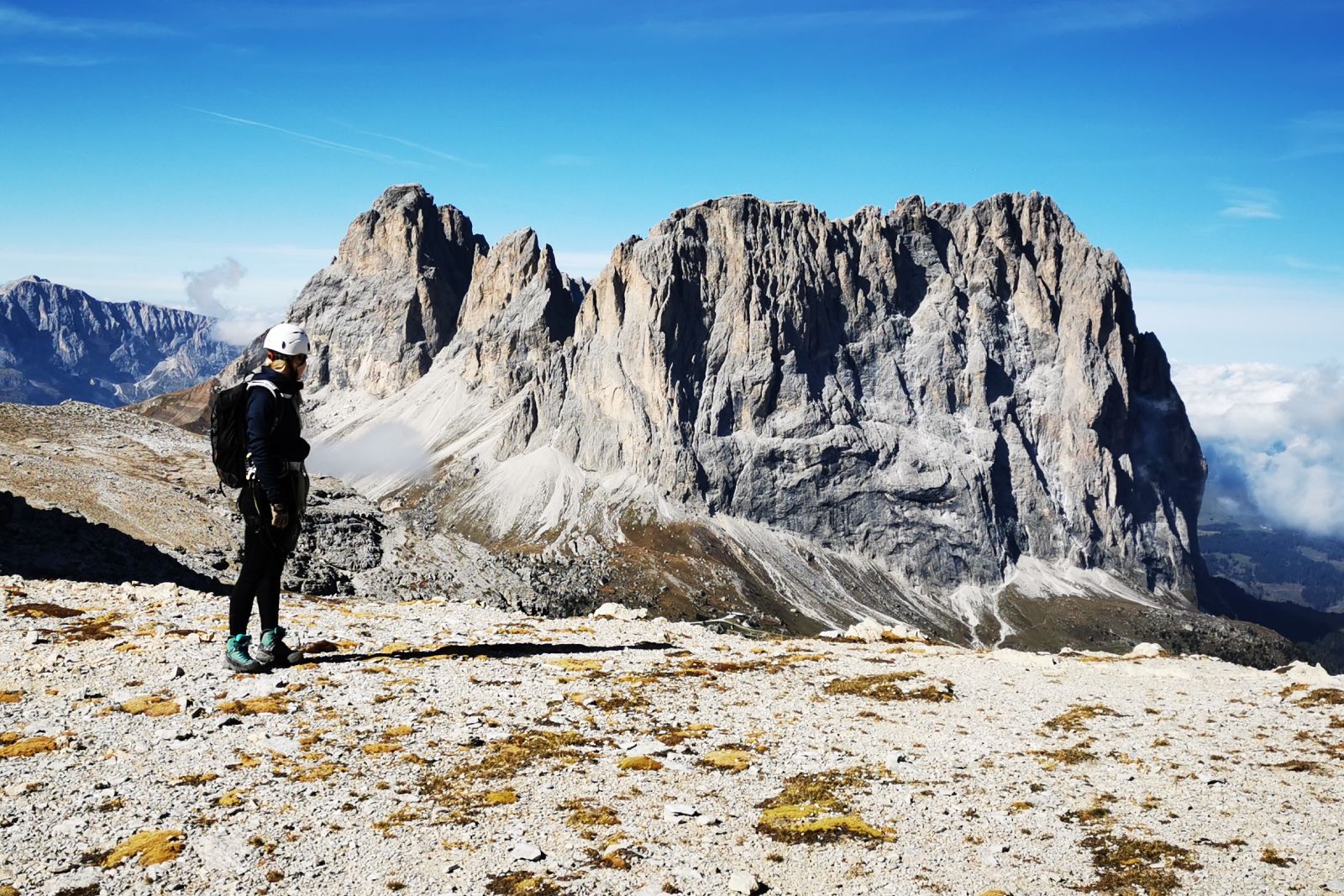
Historic Dolomites Via Ferrata to Piz Selva
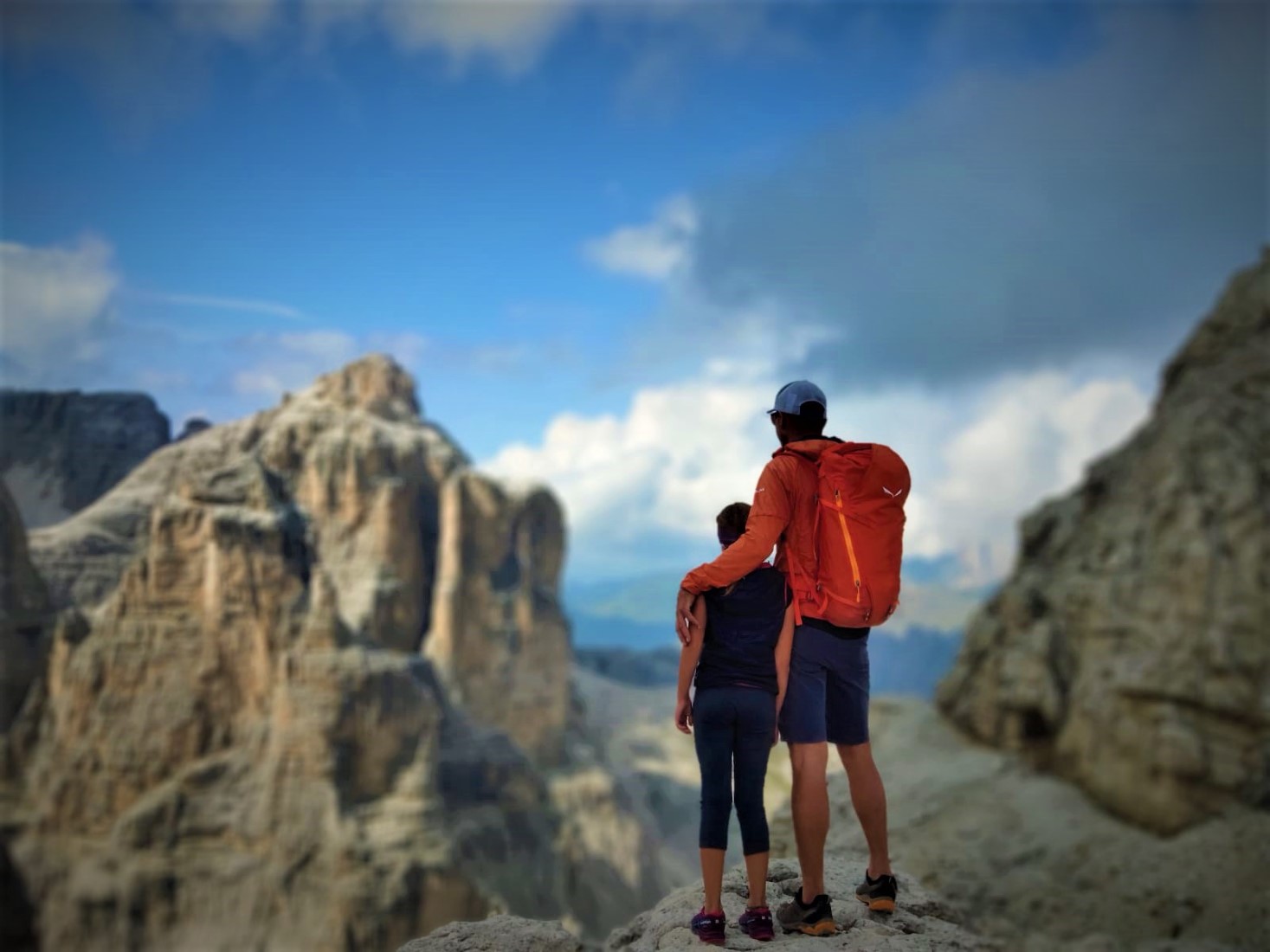
Spectacular Dolomites Climb with Panoramic Views
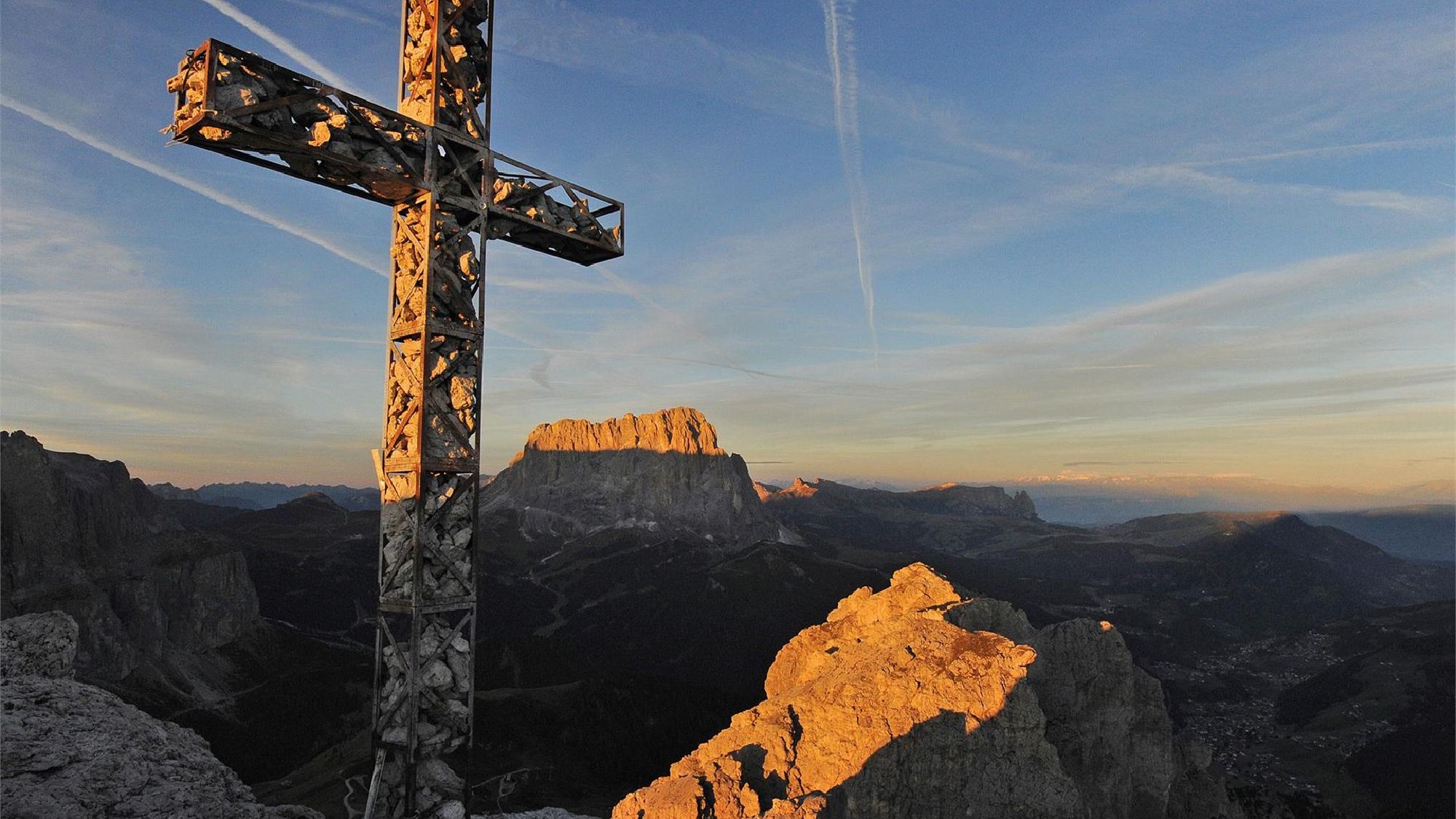
Beginner-Friendly Dolomites Tour
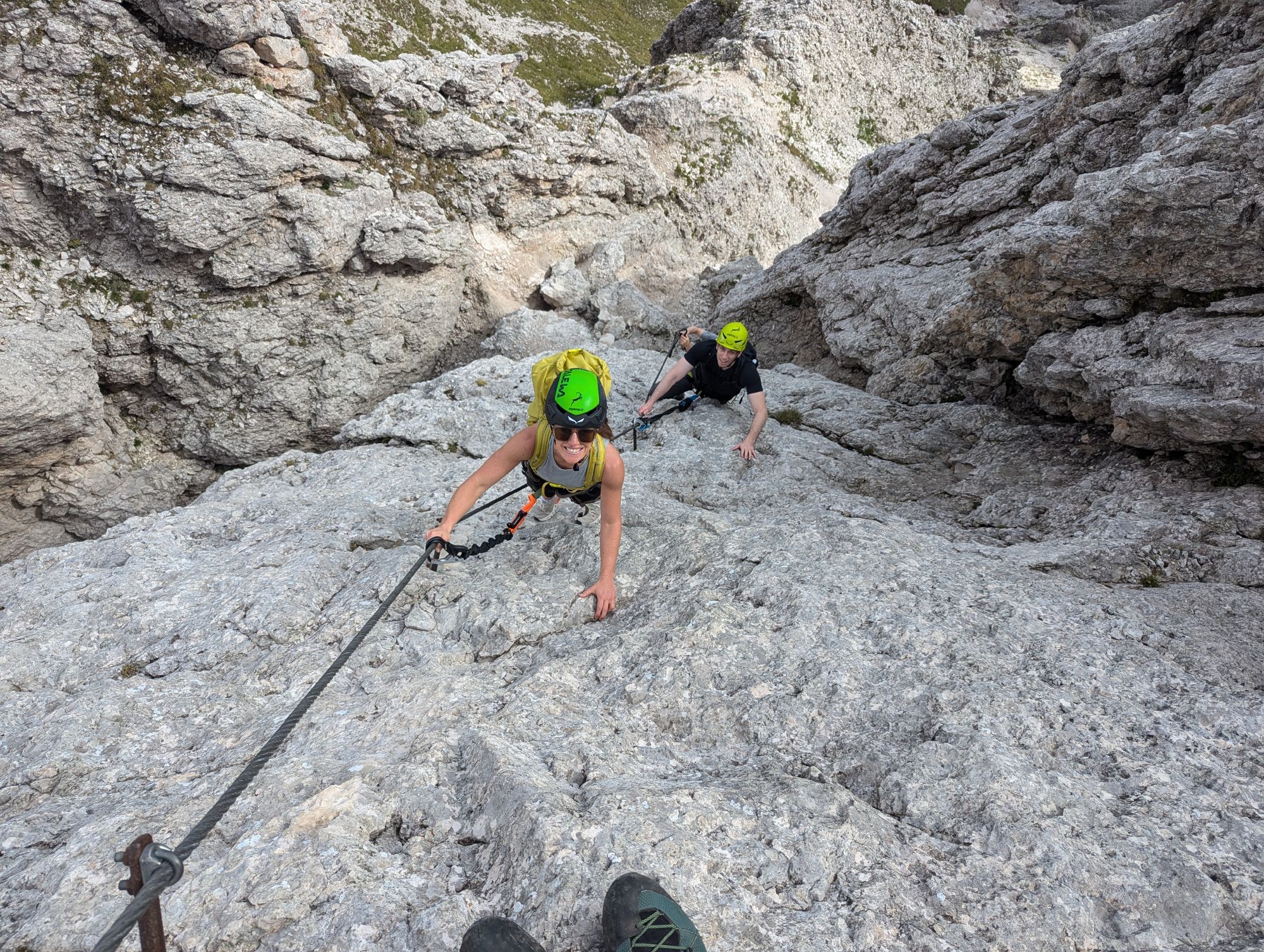
Adventurous Route with Views of the Geisler Peaks
4-Day Via Ferrata Adventure in the Dolomites
Experience the Crossing of the Highest Peak in the Rosengarten