Day 1
Arrival takes place on Sunday. The Untertheimerhof in Villanders is easily accessible by car.
OvernightUntertheimerhof
Summer · Multi-day tour
The ultimate hiking, fun and summit experience!
Overview
For five days we explore the breathtaking mountain landscape of South Tyrol. On varied routes we climb some of the region’s most famous peaks, including Peitlerkofel, Villanderer Berg, and Schlern. Each tour offers new challenges, spectacular views, and unforgettable moments in the heart of the Dolomites.
During our hiking days in South Tyrol you will stay at the comfortable Untertheimerhof in Villanders. After the eventful tours, you can unwind in the cosy wellness area. In the morning and evening you will be spoilt with local delicacies.
A special highlight of this hiking week is the wine tasting at the Röck winery, which perfectly combines nature, culture, and enjoyment.
Requirements
Itinerary
Changes due to weather and conditions are possible.
Arrival takes place on Sunday. The Untertheimerhof in Villanders is easily accessible by car.
On Monday we hike over the Gasteiger saddle to the Sarner Scharte and on to the Villanderer Berg - the geographical centre of South Tyrol. We continue past the Totensee lake to the Totenkirchl. On the way back we hike across the high-plateau of the Villanderer Alm back to the starting point. The ascent is about 900 metres in altitude.
On Tuesday we hike from Schalders to the Schrütten lakes. On hot summer days, you can cool off in the lake. We continue our hike to the Kühberg, which lies above the lakes.
On Wednesday we climb the mighty Peitlerkofel (2,875m). We hike from the Würzjoch up to the Peitlerscharte. We continue via serpentines and a rope-secured rocky path to the summit of the Peitlerkofel.
On Thursday, we hike across the Seiser Alm to the Schlern - one of South Tyrol's landmarks. We start our tour at the Alpe di Siusi cable car station and hike through alpine meadows to the Saltnerhütte mountain hut. We continue up the serpentines to the Sciliar plateau and on to the summit of the Sciliar, where we are rewarded with a wonderful view.
On Friday we take the cable car to Pordoi and then hike up to Piz Boé (3,125m) - known to be the "easiest" peak over three thousand metres in South Tyrol. On the way back we hike via Val Setus to the Gardena Pass.
Our hiking days come to an end on Saturday. Your suitcase is now filled with many wonderful memories of the experiences in the past days.
Services
A clear overview for your planning.
Equipment
Missing equipment can be provided by us if needed.
FAQ
The right tour depends on your experience, fitness level and personal goals. Many people are unsure which activity is suitable for them. Beginners often start with hikes, snowshoe tours or easy via ferratas, while more experienced mountaineers tend to choose high-altitude tours or more challenging alpine routes. To help you find the right tour, each tour includes a rating in three categories: fitness, technical skills and alpine experience (each rated from 1 to 5). This allows you to quickly assess the difficulty of a tour and decide whether it matches your abilities. If you are unsure, we are happy to offer personal advice to help you choose the right tour. Get in touch with us and together we will find a tour that suits your experience level and goals.
A guided tour with a certified mountain guide offers greater safety, a more rewarding experience and reliable planning. In alpine terrain, weather, navigation and risk assessment play a crucial role. As mountain guides, we know the current conditions, choose suitable routes and adapt the tour to the situation and your ability level. Especially on high-altitude tours, ski tours and alpine climbing routes, you benefit from being able to explore challenging terrain safely without having to make every decision yourself. Along the way, you can also learn valuable skills – from moving efficiently in steep terrain to handling alpine equipment correctly. A guided tour is therefore not only safer but often a more rewarding and relaxed experience – whether you want to gain your first alpine experience or reach a challenging objective.
Planning starts either with a specific tour in mind or with us helping you choose the right one. Once you have selected a tour, you can send us an enquiry by email or via the contact form. We will then check availability and agree on a suitable date together. You will already find much of the essential information – such as the itinerary, requirements and equipment – in the individual tour descriptions. We will also provide you with all the relevant details about preparation and the meeting point. Shortly before the tour, we check the weather forecast and current conditions and adjust the plan if necessary. This way, you know exactly what to expect and can focus entirely on your mountain experience.
To book a guided tour, simply send us an enquiry by email or via the contact form. After receiving your enquiry, we check availability and agree on a suitable date together. You will then receive all the relevant information about the tour. Your booking becomes binding once the deposit has been received. You will then receive a booking confirmation. The deposit will later be deducted from the total price of the tour. Payment is made by bank transfer. All payment details can be found in our Terms and Conditions. Please note that participation requires certain levels of fitness, technical ability and appropriate equipment, as specified in the individual tour description.
In the event of bad weather or unfavourable conditions, safety always comes first. The mountain guide decides whether a tour can go ahead, needs to be modified or must be cancelled, based on a careful assessment of the current weather and terrain conditions. If a day tour is cancelled in advance, you will be informed in good time and we will arrange an alternative date or another suitable solution together. For multi-day tours and week-long trips, the programme is adapted flexibly to the prevailing conditions. If individual stages cannot be completed as planned, safe and appropriate alternatives will be chosen so that the overall tour can still go ahead. Details regarding financial arrangements in the event of a tour being interrupted can be found in our Terms and Conditions.
The earlier you get in touch, the easier it is to plan your preferred tour and date. Many tours depend on the season, weather and current conditions, and availability is often limited. We therefore recommend booking well in advance, especially for fixed dates, weekends and longer tours. Last-minute enquiries are also possible, subject to availability. Particularly during the week or outside the main season, spontaneous tours can often be arranged. Early planning is especially important for mountain and ski touring trips, as these take place in small groups and require extensive preparation. If you are enquiring as a group, we recommend getting in touch as early as possible. However, remaining places on already scheduled trips may also become available at short notice and can sometimes be booked spontaneously.
A high-altitude tour usually takes place on glaciers or in high alpine terrain and combines walking with rope work and safety techniques. A climbing tour is more technically demanding and requires confident rock-climbing skills, usually with rope protection. A via ferrata is a protected climbing route equipped with fixed steel cables and metal rungs to make the ascent easier.
Mountain hikes are often day trips with a clearly defined destination, whereas trekking usually takes place over several days. Trekking focuses on longer stages, overnight stays in mountain huts or long-distance hiking trails. Mountain hikes, on the other hand, often lead to individual summits, alpine pastures or other classic day-trip destinations. The choice depends on whether you are looking for a shorter mountain experience or a longer adventure with several stages.
Long-distance hikes are ideal for anyone who wants to spend several consecutive days exploring the mountains. The most important requirements are a good basic level of fitness, enjoyment of longer walks and a willingness to spend several days in alpine terrain. The demands can vary considerably depending on the tour.
The physical demands of a long-distance hike depend on the length of the daily stages, elevation gain and walking times. Typically, you will spend several hours hiking each day over a number of consecutive days. Weather, terrain and the weight of your backpack can also affect the level of exertion. Pacing yourself and managing your energy are essential for enjoying the tour from start to finish. Details about elevation gain, walking times and requirements can be found in the respective tour descriptions.
For a long-distance hike, you need functional outdoor clothing, sturdy hiking boots and a suitable backpack. Important items include weatherproof clothing, spare clothes, sun protection, and sufficient food and water. Depending on the route, additional equipment may be useful. Good preparation helps ensure comfort, safety and an enjoyable hiking experience over several days.
Specialist mountain experience is not required for many long-distance hikes. However, a solid basic level of fitness, sure-footedness on hiking trails and experience with longer daily stages are important. Depending on the tour, the routes can range from easy trails to alpine terrain.
You should have good basic endurance for a long-distance hike. It is important to be able to walk for several hours each day and manage consecutive stages comfortably. Elevation gain, terrain and weather conditions can increase the physical demands. An honest assessment of your own fitness is important to enjoy the tour and complete it safely.
Safety always comes first in bad weather or unfavourable conditions. Depending on the situation, stages may be adapted, shortened or rearranged. The itinerary is continuously adjusted to the current conditions to ensure the tour can be carried out safely. The aim is to make the most of your long-distance hiking experience while keeping safety the priority, even when conditions change at short notice.
Similar
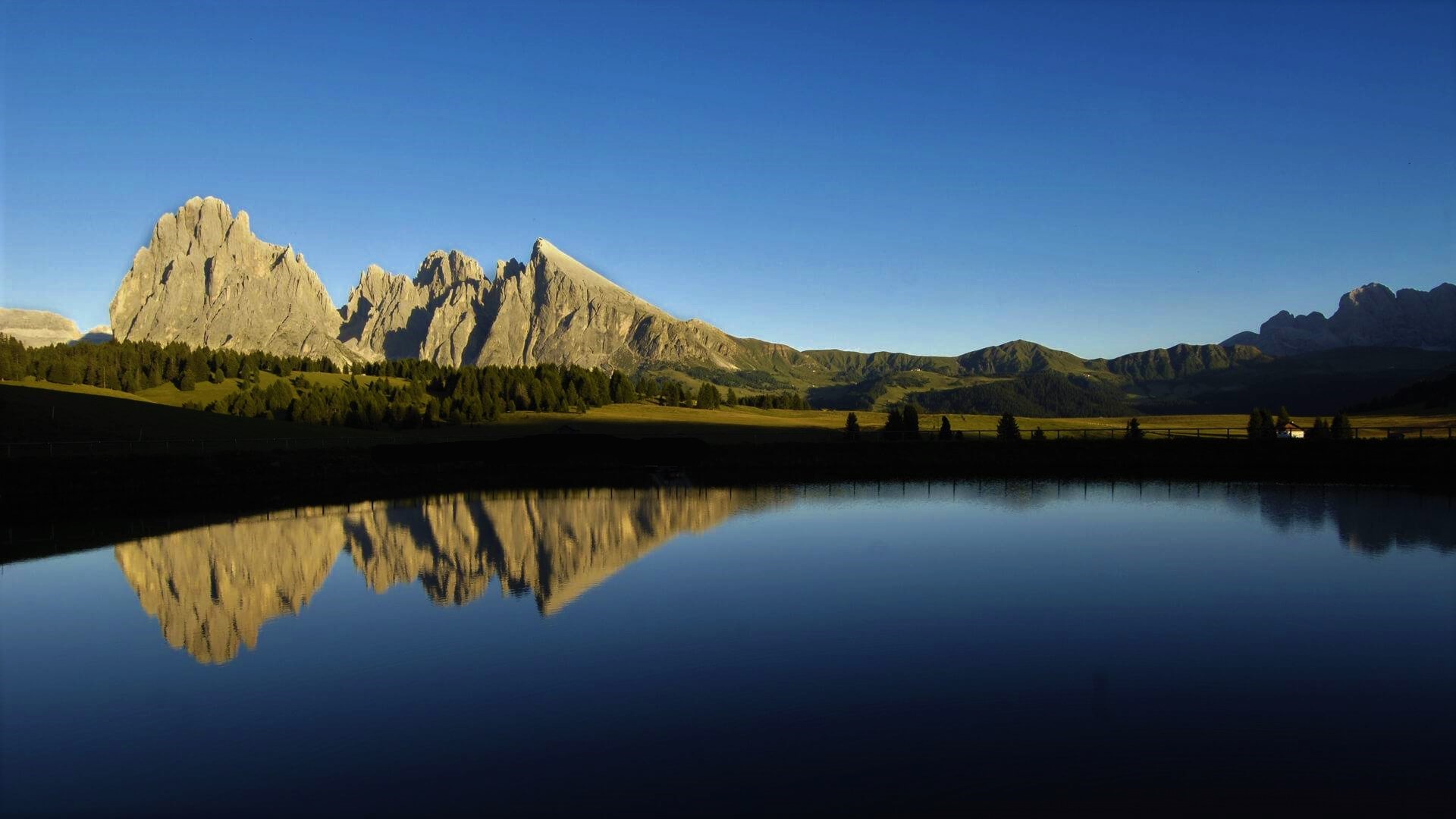
The Greatest Dolomite Peaks in One Week
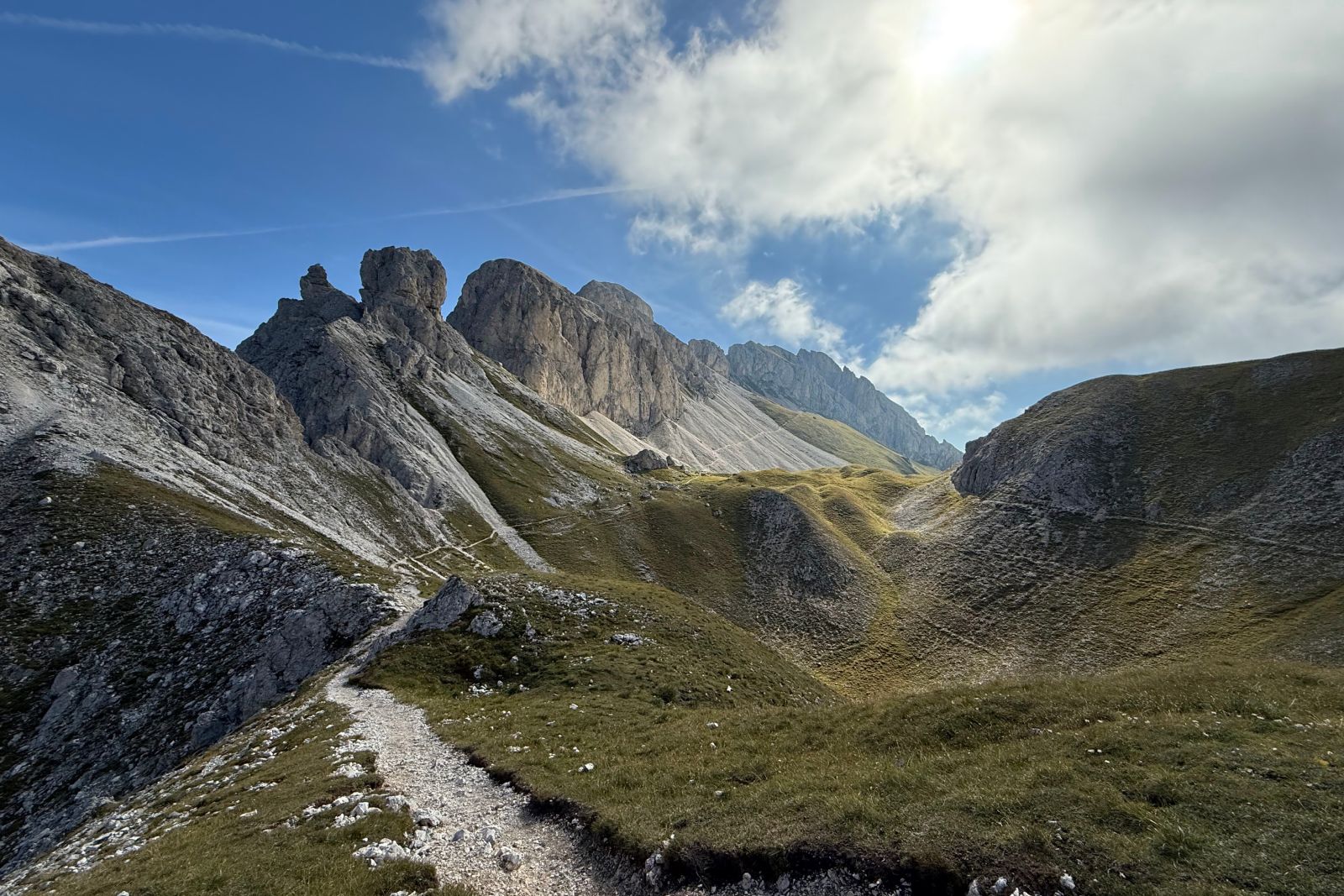
Guided Multi-Day Via Ferrata Tour in the Geisler Group
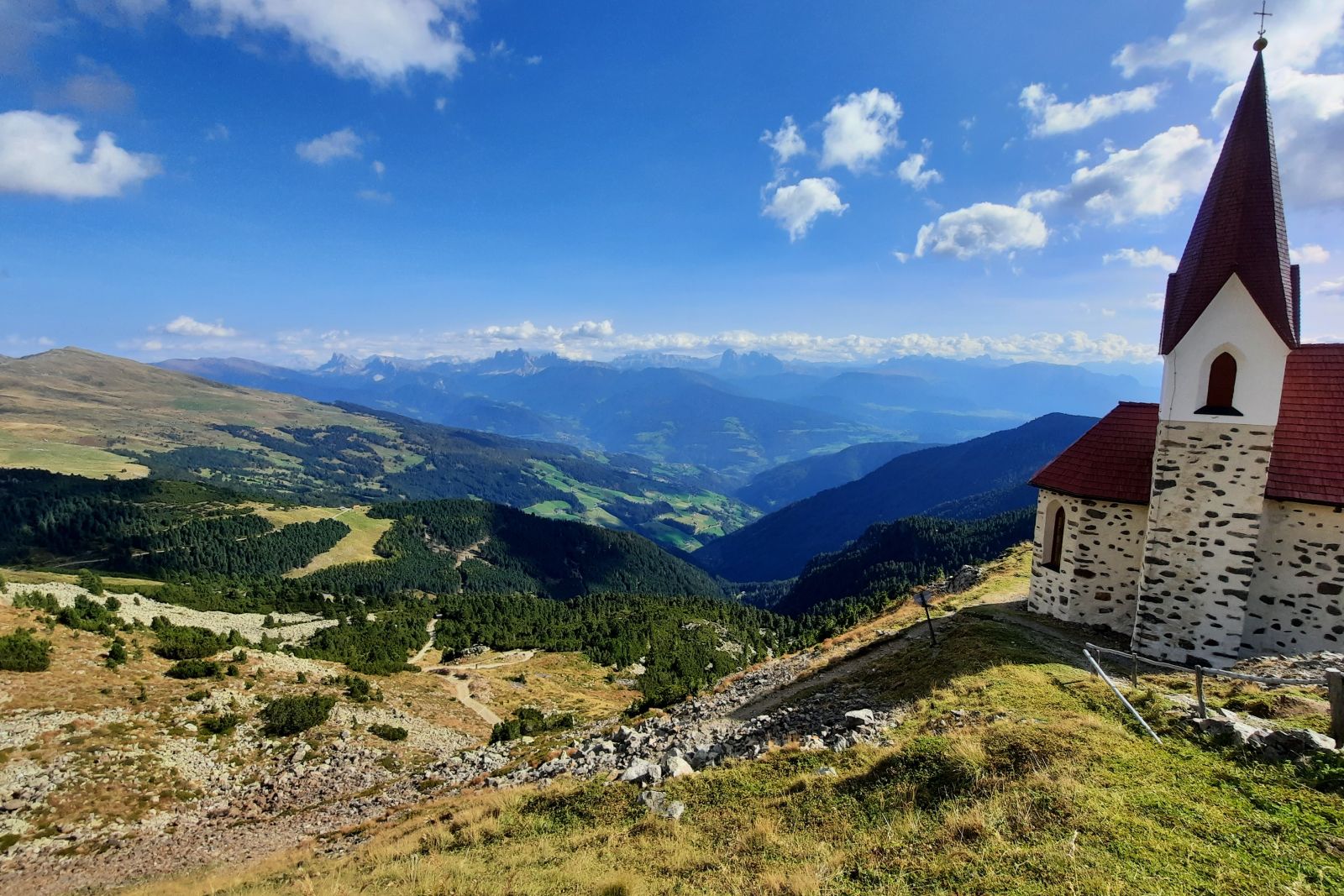
Alpine Hiking Trail in the Sarntal Alps — Seven days of nature and adventure
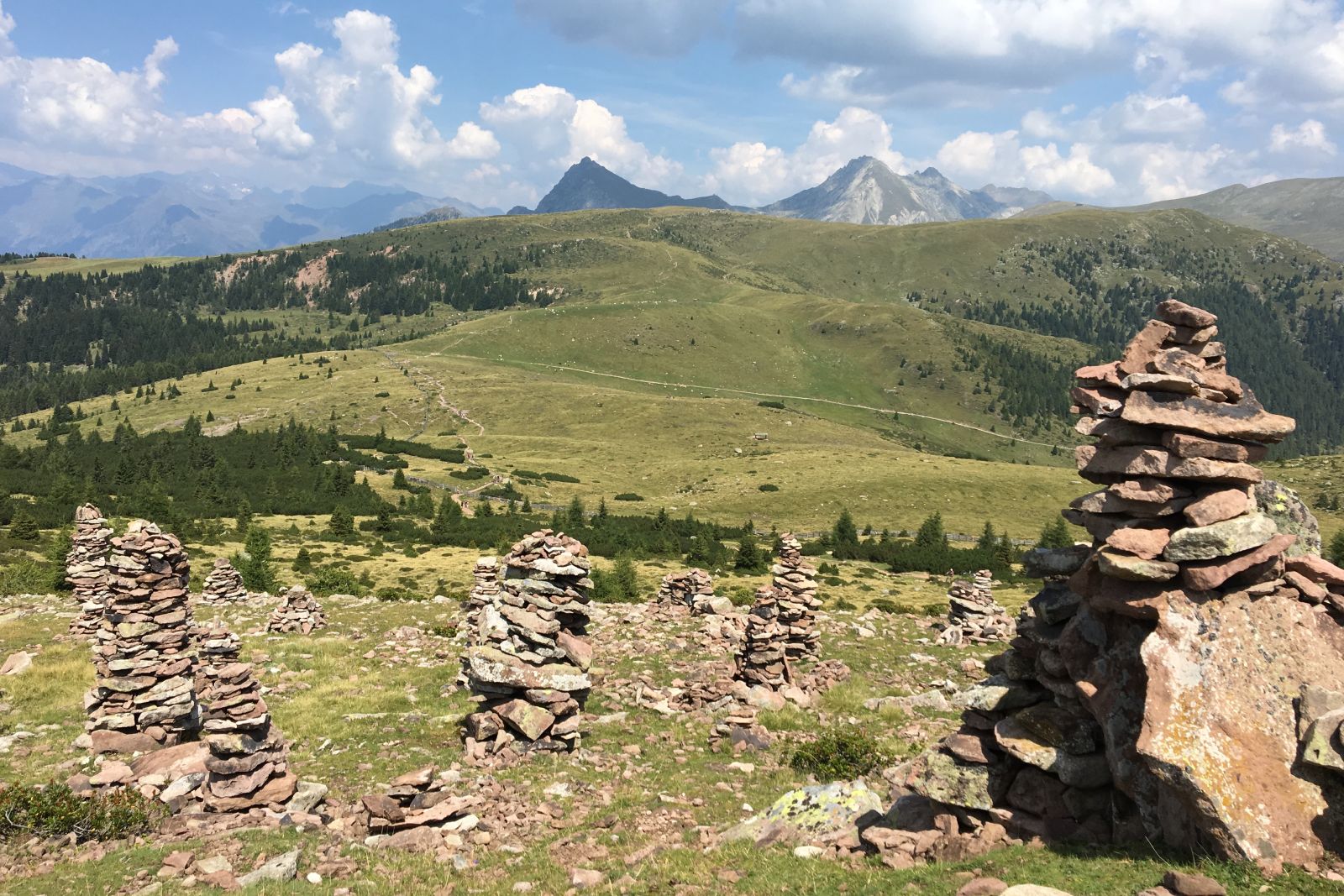
9 days and 13 summits in the Sarntal Alps
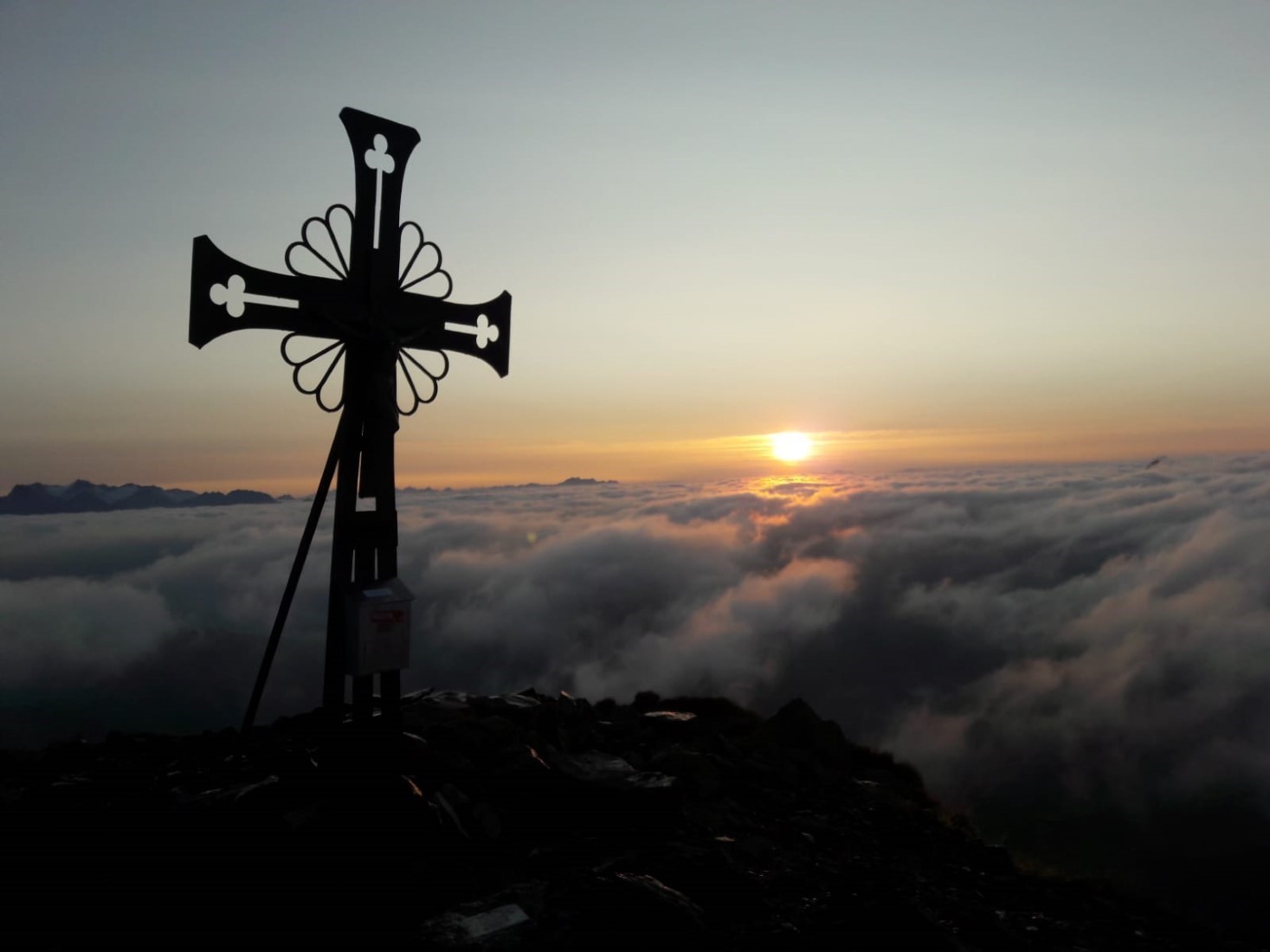
Two-Day Hike around the Villnöss Geisler
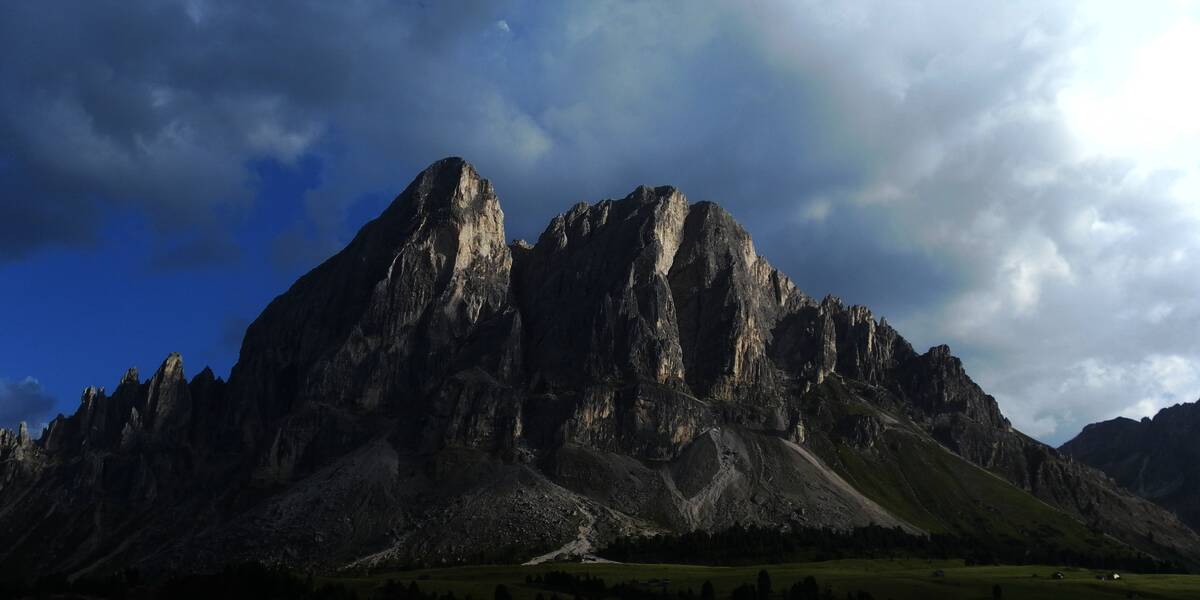
One of the most stunning hikes in South Tyrol around the iconic Peitlerkofel