Day 1
440 m ascent
Marteller Hut
We meet in the Martell Valley and climb together to the Martellerhütte (2,610m).
OvernightMartellerhütte
Winter · Multi-day tour
High-Alpine Dream Peaks in the Southern Ortler Group
Overview
The Ortler Group, stretching between South Tyrol, Lombardy and Graubünden, is one of the most spectacular regions for ski touring in the Alps. Surrounded by massive glaciers, majestic 3,000-meter peaks and endless snowfields, this guided ski touring week offers the perfect combination of challenge, nature and alpine beauty.
On this ski mountaineering week, we traverse the southern Ortler Group, linking several impressive peaks into a varied high-alpine circuit. The route leads to the Südliche Zufallspitze (3,757 m), Palon de la Mare (3,703 m), Punta San Matteo (3,678 m), and Monte Cevedale (3,769 m). Each stage has its own unique character, making this tour a truly memorable alpine experience.
Accompanied by a certified mountain guide, participants experience the highlights of the Ortler ski touring region, combining technical skill with unforgettable glacier landscapes and a true sense of adventure.
Notes: The program is adjusted to current snow and weather conditions and may be modified by the mountain guide if necessary. On request, the itinerary can be customized to the group’s fitness and goals — whether you prefer to summit multiple peaks in one day or enjoy shorter, scenic ski tours in the Ortler Alps.
Requirements
Itinerary
Changes due to weather and conditions are possible.
Marteller Hut
We meet in the Martell Valley and climb together to the Martellerhütte (2,610m).
Southern Zufallspitze (3,757 m)
From the Martellerhütte we climb over the Fürkeleferner to the Südliche Zufallspitze (3,757m) - descent to the Larcherhütte (2,608m).
Palon de la Mare (3,703 m)
From Rifugio Larcher via Vedretta de la Mare to the Palon de la Mare (3,703 m). Descent via the Ghacciaio del Palon de la Mare to the Rifugio Cesare Branca (2,493m).
Punta San Matteo (3,678 m)
From Rifugio Cesare Branca via Ghacciaio dei Forni to Punta San Matteo (3,678 m), descent to Rifugio Cesare Branca and change to Rifugio Pizzini Frattola (2,706 m).
Cevedale (3,769 m)
From the Pizzini hut ascent to the Cevedale (3,769m) and long descent into the Martell Valley.
Services
A clear overview for your planning.
Equipment
Missing equipment can be provided by us if needed.
Download PDFPackliste Ski HochtourGallery
8 photos
FAQ
The right tour depends on your experience, fitness level and personal goals. Many people are unsure which activity is suitable for them. Beginners often start with hikes, snowshoe tours or easy via ferratas, while more experienced mountaineers tend to choose high-altitude tours or more challenging alpine routes. To help you find the right tour, each tour includes a rating in three categories: fitness, technical skills and alpine experience (each rated from 1 to 5). This allows you to quickly assess the difficulty of a tour and decide whether it matches your abilities. If you are unsure, we are happy to offer personal advice to help you choose the right tour. Get in touch with us and together we will find a tour that suits your experience level and goals.
A guided tour with a certified mountain guide offers greater safety, a more rewarding experience and reliable planning. In alpine terrain, weather, navigation and risk assessment play a crucial role. As mountain guides, we know the current conditions, choose suitable routes and adapt the tour to the situation and your ability level. Especially on high-altitude tours, ski tours and alpine climbing routes, you benefit from being able to explore challenging terrain safely without having to make every decision yourself. Along the way, you can also learn valuable skills – from moving efficiently in steep terrain to handling alpine equipment correctly. A guided tour is therefore not only safer but often a more rewarding and relaxed experience – whether you want to gain your first alpine experience or reach a challenging objective.
Planning starts either with a specific tour in mind or with us helping you choose the right one. Once you have selected a tour, you can send us an enquiry by email or via the contact form. We will then check availability and agree on a suitable date together. You will already find much of the essential information – such as the itinerary, requirements and equipment – in the individual tour descriptions. We will also provide you with all the relevant details about preparation and the meeting point. Shortly before the tour, we check the weather forecast and current conditions and adjust the plan if necessary. This way, you know exactly what to expect and can focus entirely on your mountain experience.
To book a guided tour, simply send us an enquiry by email or via the contact form. After receiving your enquiry, we check availability and agree on a suitable date together. You will then receive all the relevant information about the tour. Your booking becomes binding once the deposit has been received. You will then receive a booking confirmation. The deposit will later be deducted from the total price of the tour. Payment is made by bank transfer. All payment details can be found in our Terms and Conditions. Please note that participation requires certain levels of fitness, technical ability and appropriate equipment, as specified in the individual tour description.
In the event of bad weather or unfavourable conditions, safety always comes first. The mountain guide decides whether a tour can go ahead, needs to be modified or must be cancelled, based on a careful assessment of the current weather and terrain conditions. If a day tour is cancelled in advance, you will be informed in good time and we will arrange an alternative date or another suitable solution together. For multi-day tours and week-long trips, the programme is adapted flexibly to the prevailing conditions. If individual stages cannot be completed as planned, safe and appropriate alternatives will be chosen so that the overall tour can still go ahead. Details regarding financial arrangements in the event of a tour being interrupted can be found in our Terms and Conditions.
The earlier you get in touch, the easier it is to plan your preferred tour and date. Many tours depend on the season, weather and current conditions, and availability is often limited. We therefore recommend booking well in advance, especially for fixed dates, weekends and longer tours. Last-minute enquiries are also possible, subject to availability. Particularly during the week or outside the main season, spontaneous tours can often be arranged. Early planning is especially important for mountain and ski touring trips, as these take place in small groups and require extensive preparation. If you are enquiring as a group, we recommend getting in touch as early as possible. However, remaining places on already scheduled trips may also become available at short notice and can sometimes be booked spontaneously.
A high-altitude tour usually takes place on glaciers or in high alpine terrain and combines walking with rope work and safety techniques. A climbing tour is more technically demanding and requires confident rock-climbing skills, usually with rope protection. A via ferrata is a protected climbing route equipped with fixed steel cables and metal rungs to make the ascent easier.
After arriving at the hut, you settle into your sleeping accommodation and have time to rest, enjoy dinner and prepare for the following day's tour. Depending on the hut, accommodation is provided in shared rooms or dormitories. In the evening, the plan and important information for the next stage are often discussed. As space and resources are limited in mountain huts, simple hut rules apply to ensure a pleasant stay for everyone.
For many guided tours, hut reservations are arranged as part of the tour organisation, so you do not need to book them yourself. Depending on the tour, however, participants may also be responsible for making their own reservations. You will find the relevant information in the respective tour description.
You only need to bring the essentials for an overnight stay in a mountain hut, as unnecessary weight can significantly reduce your comfort on the tour. Standard equipment includes a change of clothes, toiletries, a hut sleeping bag and personal items for your stay. The exact equipment required depends on the tour and is listed in the respective tour description.
Mountain huts offer simple and functional accommodation right in the heart of the mountains. Depending on the hut, you will stay in shared rooms or dormitories. Facilities are generally basic and differ considerably from those of a hotel. For many people, this simplicity is precisely what makes a hut-to-hut tour so special.
The availability of showers, electricity and other facilities varies from hut to hut. Many huts have electricity and basic washing facilities, although these may be limited or only available at certain times. Hot showers and charging facilities cannot be taken for granted everywhere. You can find details about the facilities directly from the respective hut.
Mountain huts generally offer breakfast and dinner, which may already be included in the overnight stay. For during the day, we recommend bringing your own snacks and provisions. You should also make sure to carry enough drinking water for the tour. Information about meals and included services can be found in the respective tour description.
Many mountain huts offer vegetarian options and some can also accommodate food intolerances. It is important to inform us of any special dietary requirements or restrictions as early as possible, as the available options vary from hut to hut. The specific options depend on the individual accommodation.
For hut-to-hut tours, we recommend packing as lightly as possible and focusing on the essentials. Depending on the tour, you may need to carry your luggage for several days, so it is worth bringing only the equipment you actually need. A suitable packing list helps you save weight while still being well prepared. You can find the detailed equipment list in the respective tour description.
Mobile phone reception and Wi-Fi availability vary from hut to hut. Many huts have limited mobile reception, while Wi-Fi is not available everywhere or may only be accessible to a limited extent. If staying connected is important to you, we recommend checking the facilities of the respective hut in advance.
Membership of an Alpine Club is generally not required to stay overnight in mountain huts. However, members often benefit from reduced accommodation rates and, in some cases, additional advantages at Alpine Club huts. The exact conditions vary depending on the hut and its operator.
Guided ski tours significantly increase safety, as avalanche conditions, weather and route choices are professionally assessed. Snow and weather conditions can change quickly, especially in winter. Factors such as avalanche risk, visibility and wind therefore need to be monitored continuously. As mountain guides, we keep a close eye on the current conditions and adapt the route, terrain and tour planning accordingly. This helps minimise risks as far as possible while making safe and rewarding ski touring experiences possible.
Extensive previous experience is not required for easy ski tours. Beginners can gain their first experience of ski touring on less demanding routes. The most important requirements are a good basic level of fitness, confident skiing on groomed pistes and the motivation to tackle longer ascents in winter terrain. However, basic knowledge of how to use an avalanche transceiver, probe and shovel is essential for guided ski tours. Beginners with no experience in winter safety procedures are therefore advised to take a ski touring course first. Requirements vary considerably depending on the tour. Our tour descriptions provide all the important information about difficulty, fitness levels and the experience required.
For ski touring and freeriding, you need suitable ski or splitboard equipment as well as alpine safety equipment. Standard equipment includes an avalanche transceiver, probe and shovel, along with clothing suitable for winter conditions. Ski touring also requires climbing skins. Depending on the tour, ski crampons, mountaineering crampons or other equipment may also be useful. Reliable safety equipment that is used correctly is essential, especially in winter alpine terrain. Before our guided tours, you will receive all the important information about the required equipment. Some items can also be rented if needed.
The level of fitness you need for a ski tour depends largely on the length, elevation gain and conditions of the individual tour. Ski tours typically involve longer ascents, often requiring several hours of walking in winter terrain. Altitude, snow quality and weather conditions can further increase the physical demands. A good basic level of fitness is therefore important to complete the tour safely and with enough energy in reserve. For guidance, our tour descriptions provide detailed information about fitness requirements, difficulty and the experience needed.
Safety always comes first when weather or avalanche conditions are unfavourable. Avalanche forecasts, weather developments and snow conditions are continuously assessed and taken into account when planning the tour. If necessary, the route, destination or itinerary will be adjusted. If the tour cannot be carried out safely, it may be postponed or cancelled.
On a ski tour, you climb uphill under your own power using touring skis or a splitboard with climbing skins. Freeriding, on the other hand, usually involves using a lift to reach the starting point before skiing down through ungroomed terrain. While ski touring often focuses on the complete experience of the ascent and reaching a summit, freeriding is more focused on the descent through ungroomed terrain. Both activities require experience in winter alpine terrain and the ability to use safety equipment correctly.
Yes, missing equipment can be rented for many of our tours. Depending on the offer, this may include an avalanche transceiver, probe, shovel or other safety equipment. Touring skis and additional equipment can sometimes also be arranged. You can find out which equipment is required and what rental options are available in the respective tour descriptions or by contacting us directly with your tour enquiry.
For freeride tours, you should be confident skiing on red and black pistes. As the descents take place in ungroomed terrain, you need to be able to ski in control in changing snow conditions and have good balance and body control. Powder, tracked-out snow and hard conditions can be considerably more challenging than groomed pistes. Requirements vary considerably depending on the tour. Our tour descriptions therefore provide detailed information about the difficulty and skiing ability required.
On a ski touring course, you will learn the essential skills for planning and completing ski tours independently and safely. These include how to use an avalanche transceiver, probe and shovel, the basics of avalanche awareness, tour planning and the right way to behave in winter alpine terrain. You will also learn uphill techniques, kick turns, walking techniques with climbing skins and safe skiing in open terrain. The focus is on gradually developing your safety skills, technique and understanding of winter conditions.
Similar
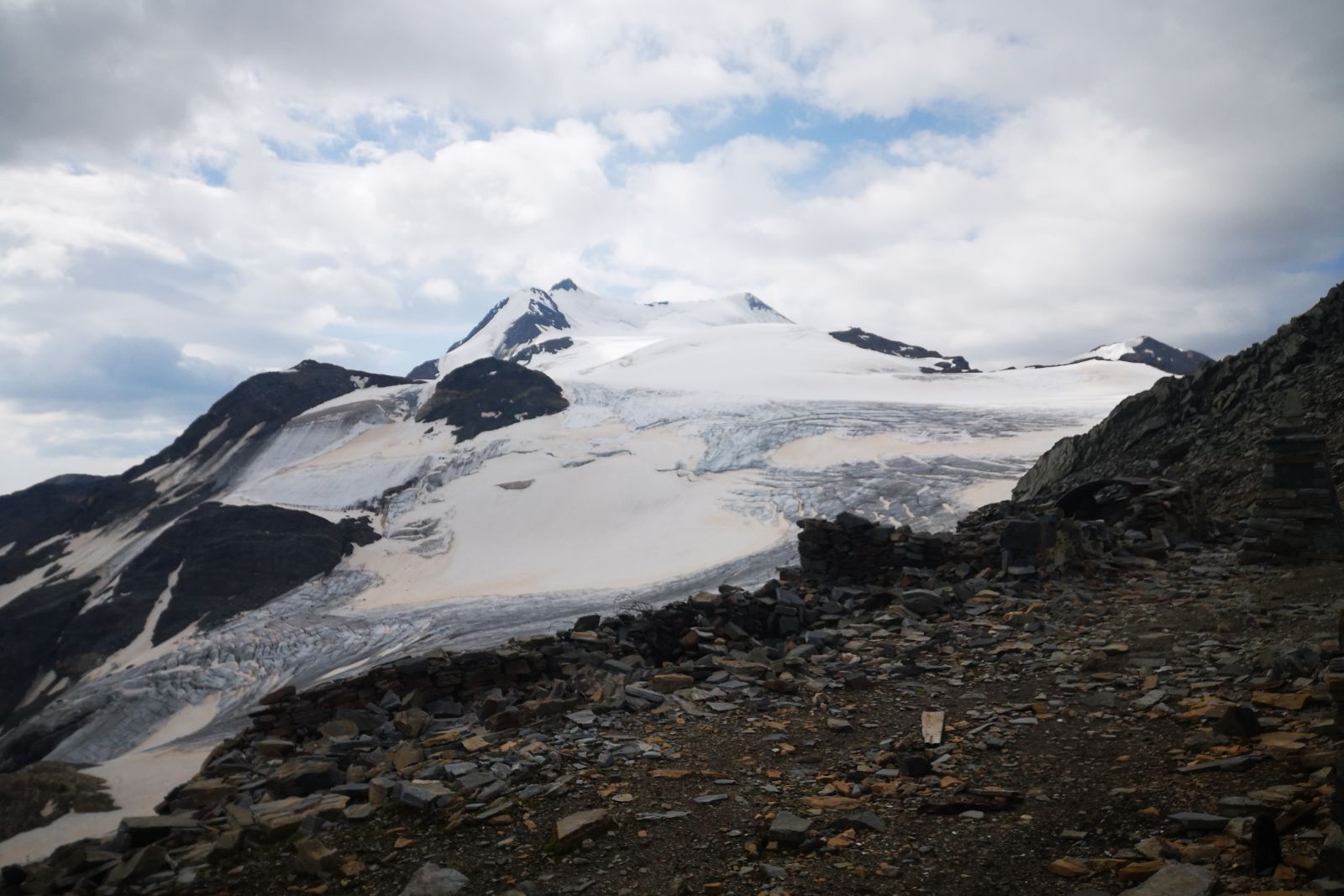
Step by Step to the Highest Peak of South Tyrol
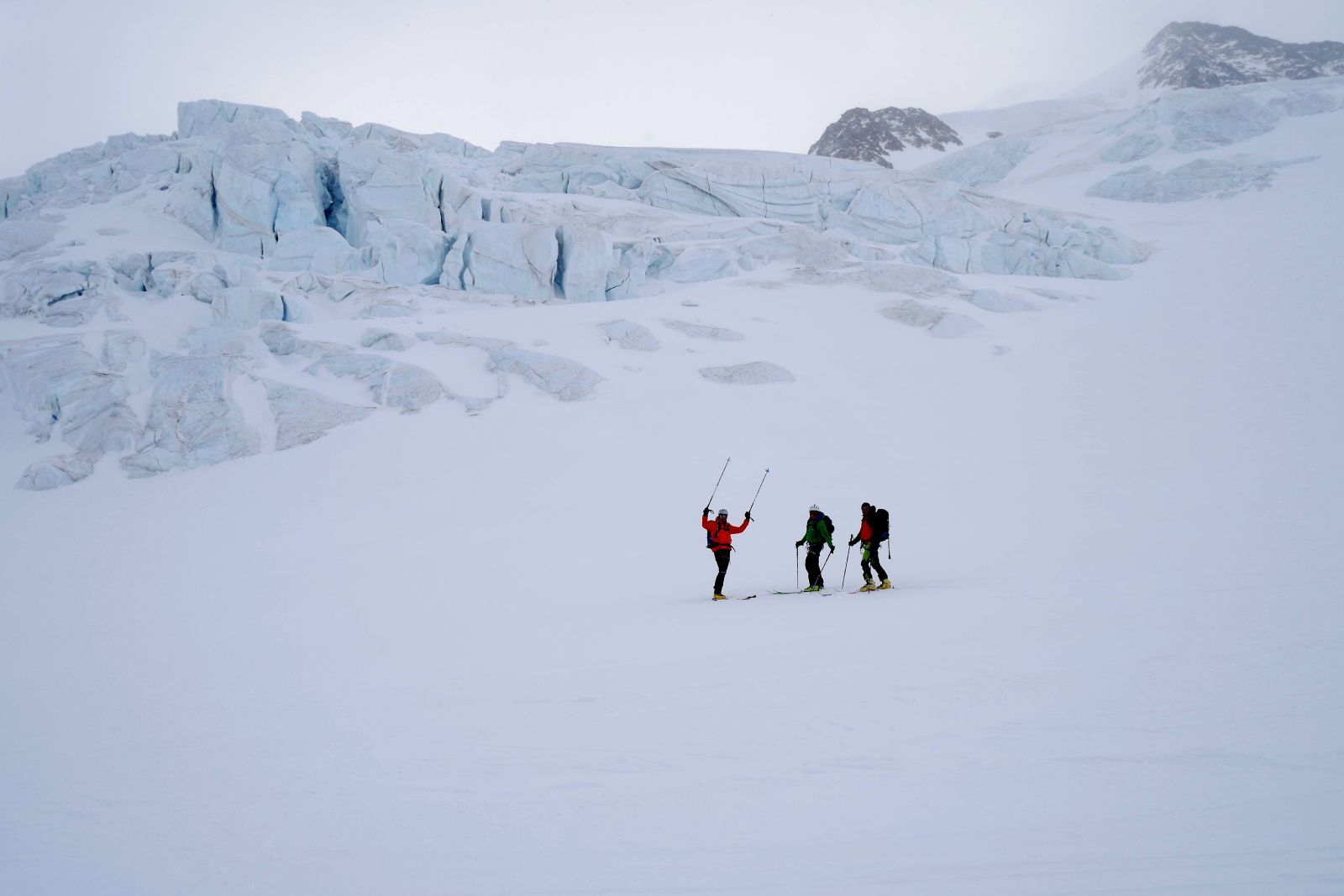
Guided Glacier Ascent to One of the Highest Peaks of the Eastern Alps
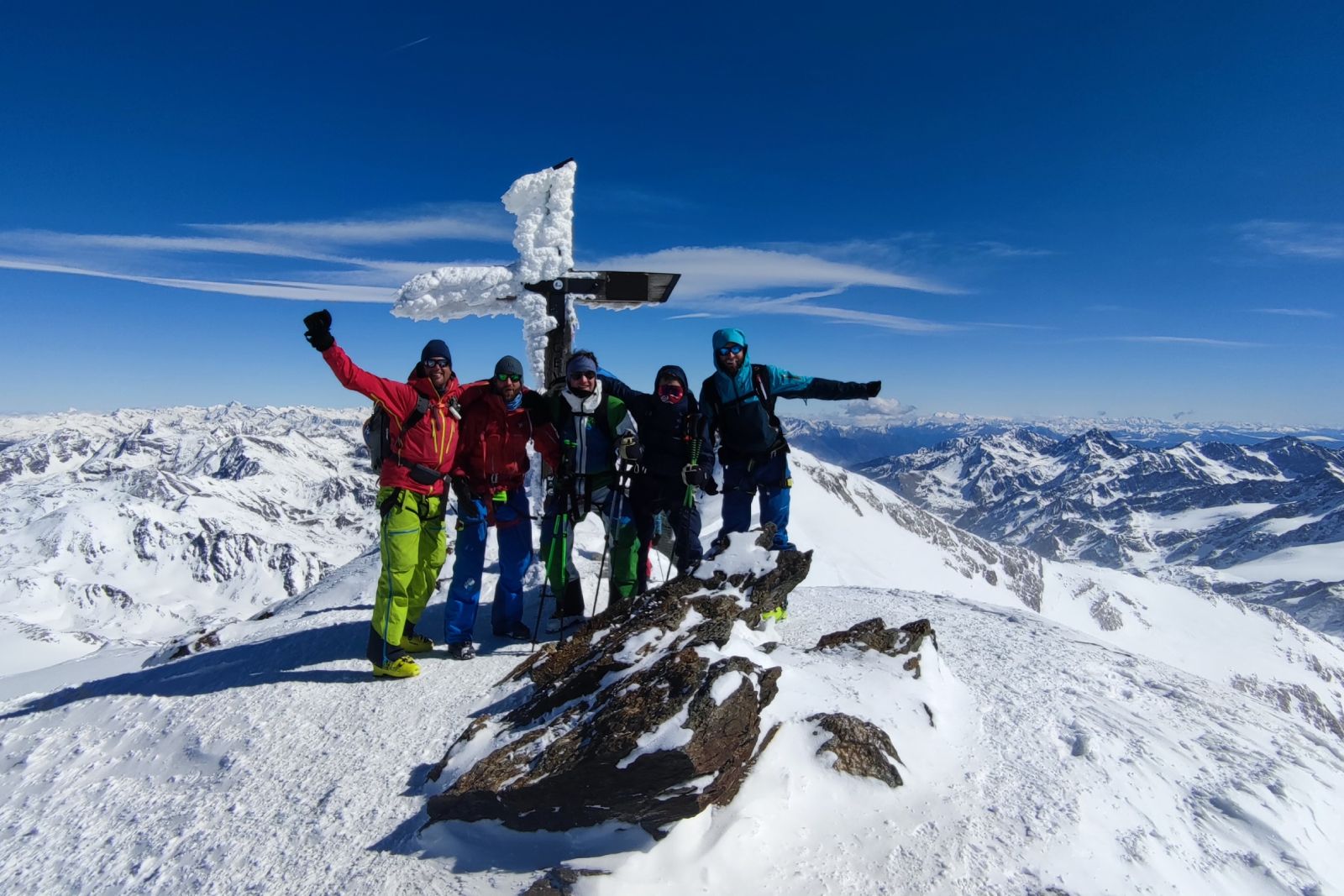
High Alpine Peaks and Deep Snow Adventures in Tyrol
Guided ski tour to one of the highest peaks in the Eastern Alps
Guided ski tour to the highest peak in South Tyrol
Combined two-day tour tour to two of the most impressive peaks of the Ortler Alps